
"The report has been finalised and it will be submitted to the Union Home Minister Shivraj Patil on Wednesday," commission sources said.
The Nanavati Commission, probing the 2002 riots, has summoned former Gujarat minister and currently spokesperson of the ruling Bharatiya Janata Party I K Jadeja on September 5 for questioning.
Gujarat high court on Thursday dismissed a Public Interest challenging the state government's decision to give further extension to Justice G T Nanavati Commission, inquiring the 2002 post-Godhra riots cases.
The Nanavati Commission on Tuesday rejected the application of social activist Mallika Sarabhai seeking to recall the suspended Indian Police Service officer Sanjiv Bhatt for questioning on the role of Chief Minister Narendra Modi in allegedly undermining her petition filed in Supreme Court after 2002 riots.
In a breather for Gujarat Chief Minister Narendra Modi, the Supreme Court on Monday refused to direct Nanavati Commission to summon him for his alleged role in the 2002 riot cases, saying it would amount to "judical overreach".

The Nanavati Commission probing the 2002 riots in Gujarat has been granted another extension of six months till December 31 this year by Gujarat government, officials said on Tuesday.
The Nanavati Commission has indicated it may submit its final report with regard to the 2002 post-Godhra riots by the end of March 2012, the state government told the Gujarat high court on Thursday.
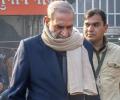
Former Congress MP Sajjan Kumar, who was serving a life sentence for his involvement in the 1984 anti-Sikh riots, has died. He was convicted in two separate cases related to the killings of Sikhs during the riots and was lodged in Tihar Jail.
Gujarat government has given one year extension to Justice Nanavati and Justice Mehta Commission probing 2002 Godhra and post-Godhra communal riots, state government officials said on Thursday.
The Nanavati Commission probing the 2002 riots has been granted extension of six months till June 30, 2013, for the 19th time, officials associated with the commission said.
The Nanavati Commission, probing the 2002 post-Godhra riots, on Thursday reserved its order on an application, seeking summoning of Gujarat Chief Minister Narendra Modi and three others for questioning.
The hearing of Nanavati Commission to decide on cross-examination of former minister I K Jadeja for his alleged role in 2002 communal riots was on Monday adjourned as he failed to appear before the panel.
Accusing the Delhi police personnel of remaining passive and not providing protection during the 1984 anti-Sikh riots, the Nanavati Commission on Monday said if 'timely action' had been taken by the police, many lives could have been saved.
Non governmental organisations seeking curbs on circulation of the Nanavati Commission report giving clean chit to Gujarat Chief Minister Narender Modi in the Godhra train carnage and subsequent riots got a setback as the Supreme Court on Monday disagreed that there was illegality in submitting an interim report.
The Nanavati commission has summoned former minister Gordhan Zadafia for questioning in connection with post-Godhra riot cases that the panel is investigating. Zadafia who was Minister of State for Home during 2002 riots has been asked to appear on October 20, sources in the commission said on Tuesday.
Since Justice G T Nanavati submitted report to Union Home Minister Shivraj Patil in New Delhi on Wednesday, the Sikh community and opposition parties have been demanding that it be made public.
The Nanavati Commission, which is probing the post-Godhra communal riots, has summoned senior police officer Sanjiv Bhatt. Bhatt had filed an affidavit in the Supreme Court implicating Gujarat Chief Minister Narendra Modi in connection to the riots.Sources said that the commission has asked Bhatt to appear before it on May 16 after an application filed before it by the Jan Sangarsh Manch, an NGO representing some of the riot victims.
The government on Monday rubbished charges made by the NDA that the Nanavati commission report on the 1984 anti-sikh riots was an "eye-wash".
G T Nanavati Commission, which probed the 1984 anti-Sikh riots, has said that there was "credible evidence" against now Union Minister Jagdish Tytler that he "very probably" had a hand in organising attacks on Sikhs.
G T Nanavati Commission, which probed the 1984 anti-Sikh riots, has said that there was "credible evidence" against now Union Minister Jagdish Tytler that he "very probably" had a hand in organising attacks on Sikhs.
Sikh groups demand that the report should be made public in two weeks.
"The best timing of the report for me would have been before the assembly polls ... Lok Sabha elections are still six months away," he said.
The Nanavati Commission, probing the 2002 riot cases, on Thursday kept the option of questioning Chief Minister Narendra Modi open when it told the Gujarat High Court that its decision not to summon him was "not final".
Decks were cleared for tabling the report of Justice Nanavati Commission, which probed the 1984 anti-Sikh riots with the union cabinet clearing the action taken report.
The appointment of Justice Akshay Mehta to the Nanavati Commission has sparked off a controversy after the Jan Sangharsh Manch decided not to participate in its proceedings."Allegations were made against Justice Mehta in a sting operation `Kalank' of Tehelka and a TV channel," advocate Mukul Sinha, who represents a section of riot victims, said. He is the same judge whom Babu Bajrangi, the main accused in the Naroda Patia case, referred to as apna admi in the Tehelka tapes.
The Communist Party of India (Marxist) and the Communist Party of India, on Tuesday asked the government to launch prosecution against those whose culpability had been indicated by the Nanavati Commission on the 1984 anti-Sikh riots.\n

The judicial commission that probed the 2002 Gujarar riots said in Ahmedabad on Wednesday that there is insufficient evidence to support allegations levelled against the then Gujarat chief minister Narendra Modi to summon him for questioning before the panel.
With the government agreeing for a discussion on the adjournment motion in the Lok Sabha moved by the opposition on the Nanavati Commission report, National Democratic Alliance leaders on Wednesday decided to participate in it.
The BJP warned if the government did not table the report in the beginning of second half of the Budget session it will not allow the House to function smoothly.
The sealed cover was handed over by the Government Pleader Prakash Jani to a division bench of Chief Justice S J Mukhopadhaya and Justice Akil Kureshi, during the hearing on a petition seeking cross-examination of Chief Minister Narendra Modi and three others.
BJP took exception on Friday to the "silence being maintained" by Congress President Sonia Gandhi on the Nanavati commission report and demanded that she too apologise to the nation for the 1984 anti-Sikh riots.
The Rajya Sabha was adjourned for the second straight day on Wednesday without transacting any business as a determined Opposition stalled proceedings demanding action against those indicted by the Nanavati Commission.

The Nanavati Commission, which was appointed in 2002, after five years observed that police at some places were ineffective in controlling the mob and said the post-Godhra riots that spread out in the state were "not a pre-planned conspiracy or orchestrated violence.
Shivraj Patil said the Congress leaders were not at fault for the riots of '84.
Under attack from both the Opposition and its Left allies, the government has agreed for a discussion on the Nanavati Commission Report on the 1984 anti-Sikh riots in the Lok Sabha on Wednesday.
